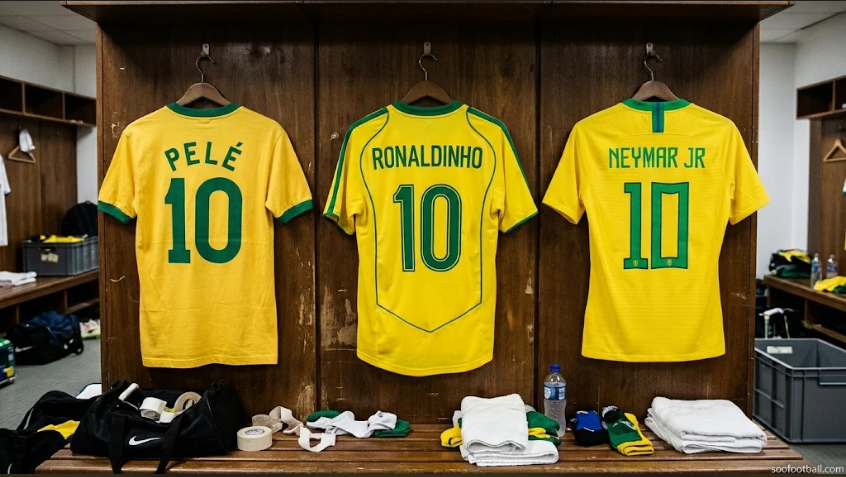
Millions of football fans around the world know legendary stars like Pelé, Ronaldinho, Kaká, Neymar, and Marta by just a single name. When you watch the famous yellow jersey of Brazil, you rarely see long family surnames printed across the back.
To people watching outside South America, using a single name might look like a clever fashion choice or a modern marketing trick. However, the real reason goes back hundreds of years into Brazilian culture, language, and everyday family life.
| Feature | Details |
| Main Reason | Long legal family names and common surnames make single names more practical |
| Cultural Name | Known in Portuguese as an apelido (friendly nickname) |
| Famous Examples | Pelé, Garrincha, Kaká, Ronaldinho, Neymar Jr |
| Popular Suffixes | -inho (means “little”) and -ão (means “big”) |
Brazilian Legal Names Are Exceptionally Long
In Brazil, children receive several family names when they are born. A baby usually gets one or two given names, followed by the mother’s family name, and then the father’s family name. This tradition comes from old Portuguese naming rules.
Because of this system, a person’s full official name often has four or five separate words. The modern star Neymar has the full legal name Neymar da Silva Santos Júnior. The legendary Pelé was registered at birth as Edson Arantes do Nascimento.
When organised football first arrived in Brazil, printing these massive names on paper match reports was difficult. Squeezing four long words onto the back of a football jersey was even harder. Using a short single name made life much simpler for stadium announcers, newspaper printers, and fans watching from the stands.
Common Family Names Make Surnames Hard to Use
Another big practical reason is that Brazilian family names are shared by millions of people across the country. Historical colonial records show that many families ended up with the exact same last names.
Over twelve million citizens in Brazil carry the family name Silva. Millions more carry Santos, Oliveira, or Souza.
| Family Surname | Estimated Population | Why Single Names Help |
| da Silva | Over 12 Million | Prevents having multiple players with the same shirt name |
| dos Santos | Over 7 Million | Makes team sheets clear for commentators and fans |
| Oliveira | Over 4 Million | Helps individual players stand out on the pitch |
If Brazilian football clubs used traditional European surnames on team lists, a starting lineup could easily feature five different players all named “Silva” or “Santos.” Using a first name or a unique personal nickname is the easiest way to tell teammates apart on the pitch. This is similar to why Dutch footballers have ‘van’ in their surnames, where national traditions shape how players appear on matchday.
The Brazilian Love for Friendly Nicknames
In Brazilian society, people love using friendly nicknames in everyday life. The Portuguese word for a nickname is apelido. These nicknames are not just silly jokes for the weekend. They are an important part of how people speak to each other at home, at school, and at work.
Brazilians rarely call their friends or coworkers by formal last names. Even top political leaders and national figures use friendly single names in public. The president of Brazil is known everywhere simply as Lula, which was a childhood nickname that he eventually added to his legal documents.
When young children play football on neighbourhood streets, their friends naturally give them fun nicknames. As those kids grow up and join professional academies, those same childhood nicknames follow them all the way to the national team.
The Meaning Behind “inho” and “ão” in Player Names
The Portuguese language uses special word endings that create famous football names. Adding “-inho” to the end of a name means “little” or “younger.” It is a warm way of showing affection or describing a younger player.
When a young Ronaldo de Assis Moreira joined the senior national team, the squad already had an established superstar named Ronaldo Nazário. To keep things clear and show affection, fans and teammates called the younger star Ronaldinho, which means “Little Ronaldo.”
Adding “-ão” to a name means the exact opposite, describing someone big or strong. Former defender Ronaldo Rodrigues de Jesus went by the name Ronaldão (“Big Ronaldo”) so supporters could tell him apart from younger players.
Other famous single names come from childish mistakes. The superstar Kaká got his famous name because his little brother could not pronounce “Ricardo” when they were young children.
| Shirt Name | Real Legal Name | How the Name Started |
| Pelé | Edson Arantes do Nascimento | Childhood mispronunciation of a local goalkeeper named Bilé |
| Garrincha | Manuel Francisco dos Santos | Named after a tiny, fast bird by his sister |
| Kaká | Rodrigo Izecson dos Santos Leite | His little brother struggled to say “Ricardo” |
| Ronaldinho | Ronaldo de Assis Moreira | Means “Little Ronaldo” to separate him from Ronaldo Nazário |
| Hulk | Givanildo Vieira de Sousa | Named by his father after the strong comic book hero |
How Modern Brazilian Players Choose Their Shirt Names
Younger Brazilian players are slightly changing how they put names on their shirts today. Many modern stars prefer using their given first name along with “Jr” or choosing short double names.
Neymar wears Neymar Jr. on his jersey, while Real Madrid winger Vinícius Júnior uses Vinícius Jr. Other modern stars choose single first names like Rodrygo, Alisson, or Richarlison.
These choices help players create a clear personal brand for international clubs and global brand sponsors. However, the core tradition remains the same. Whether a player chooses a childhood nickname or their first name, Brazilian football always puts personal connection before formal family surnames.
If you enjoy comparing famous players across different eras, check out our statistical guides like Kylian Mbappé vs Erling Haaland stats or Haaland vs Osimhen stats. You can also find great analytical tools in our list of the best soccer statistics sites.
You can also watch a quick visual summary of this naming history in this Brazilian player names short video.
Frequently Asked Questions
Yes. FIFA rules allow players to register an official shirt name or sporting nickname on their tournament forms, as long as it is declared before the competition starts.
The ending “inho” means “little” or “younger” in Portuguese. It is added to names to show affection or to separate a younger player from an older player with the same name.
Many modern players use “Jr”. alongside their first name to honour their fathers while building a clear, unique brand name for international clubs and sponsors.
Single names are also used in Portugal and Spain, but Brazil is the most famous country for using single names across all levels of football.